Learning from History: how religion shaped modern British identity
Prof. John Coffey, 22 June 2026
“As twenty-first century Britain revisits the question of religion and national identity, refamiliarising ourselves with our history is a valuable resource for navigating our current debates.”
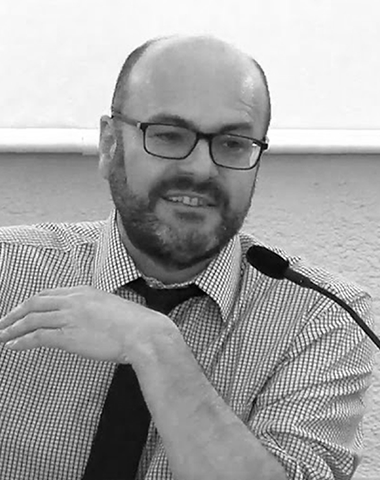
As contemporary Britain reconsiders its national identity and the role of religious and non-religious worldviews, Prof John Coffey addressed MPs, peers and civic leaders on the formative influence of religion in defining and redefining British national identity.
In considering developments from the Reformation to the 19th Century and the shift from a religious (confessional) state to a liberal state marked by religious equality, Prof. Coffey showed how Anglicans, from Locke to Gladstone, came to believe that an exclusive form of religious nationalism was bad for religion itself.
Prof John Coffey is Professor of the School of Civic Leadership at the University of Texas at Austin and honorary professor of History, Politics and International Relations at the University of Leicester.
Learning from History: What meanings are attached to being a “Christian Country” and to what ends?
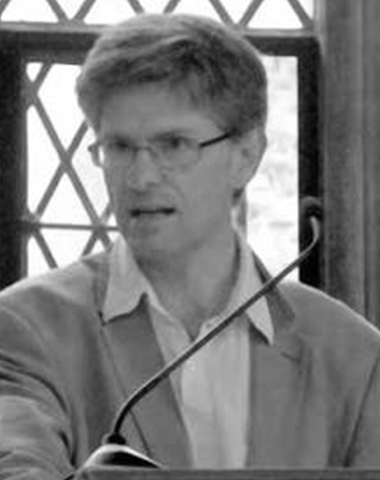
Prof. Alec Ryrie, 17th November 2026Professor of the History of Christianity, University of Durham
A century ago, Britain thought of itself unproblematically as a ‘Christian country’. Now that description has become controversial. It is more common to think of ourselves as living in a ‘secular’ or ‘multi-faith’ society. Yet, at the same time our nation is marked by renewed Islamophobia, antisemitism, anti-Catholicism, and wider claims of discrimination against Christians.
None of this makes any sense unless we understand how we got here.
Following on from the previous session’s exploration of religious tolerance and intolerance, and of inclusion and exclusion over the past 500 years, this session will look at the profound shifts of the 20th century. It will explore the double edges of the supposed ‘British value’ of ‘tolerance’, as well as the shift in perspectives on the role of the church in society.
This event is kindly sponsored by the Bishop of Leicester.
Prof. Alec Ryrie is Professor of the History of Christianity at the University of Durham, a Fellow of the British Academy and author of ten books on aspects of the history of Christianity in the modern era.
About us
Second City Project was founded by Christian politicians and academics committed to a healthy democracy for the public good.
Our mission is to equip UK politicians and key opinion formers with leading Christian academic thinking to respond to 21st century questions of democracy, belief and national identity.
Mission
We fulfil our mission in three ways:
01
Curate
We challenge false arguments, misinformation and over-simplification with evidenced-based, academically-credible resources, events and research on democracy, belief and national identity.
02
Convene
We tackle polarisation by creating constructive spaces for politicians and opinion formers to share diverse perspectives on issues of democracy, belief and national identity, informed by Second City Project resources and experts.
03
Communicate
We equip politicians and opinion formers to speak on issues of democracy, belief and national identity with credible evidence-based data.
Everything we do is motivated by our belief that a democratic society which values freedom of religion and belief is good for people, religion and the state.
Our name
Our name comes from an Augustinian concept of two cities or ‘realms’ defined and motivated by their ultimate love. As Christians, our first ‘city’ is Christ who calls us to serve the ‘second city’ in which we live.
Our name also recognises that democracy relies upon a set of values and beliefs that it itself cannot generate. In that sense, everyone has a ‘first city’ which they bring to their politics.